
Make a Small Bathroom Feel Bigger
If a bathroom can be reconfigured to make it more functional, we’re all for it, but we also know that doesn’t make sense for every project. Some bathrooms already have the best layout given the footprint, but they still feel claustrophobic.
The most common full bathroom layout we see is when you walk into the bathroom and immediately to the right is the vanity, next to that is the toilet, and at the end of the room is the tub/shower combo. Does this sound familiar? If you have a bathroom similar to this there are ways to make the space feel larger without knocking out walls.
For those that can’t change the layout of their bathroom, these strategies will help make your small bathroom renovation allow the newly updated space to feel as spacious as possible.
If you don’t feel like reading, listen instead ↓ Or continue to read below.
Fixtures
A consistent goal for our clients is to get as much off of the countertops as possible. These items often include toothbrushes, bottles, and hairbrushes. But this can also include built-in items like your sink faucet. In very small bathrooms, we’ll specify a wall-mounted faucet to maximize the counter space. Keep in mind that the valve for a wall-mounted faucet is more expensive than for a deck-mounted faucet and is generally more labor for a plumber to install.
If you’re looking to maximize storage capacity even more in a tiny bathroom, I would recommend a medicine cabinet instead of a mirror. If you use an electric toothbrush or an electric razor, a medicine cabinet with an integrated outlet can be very convenient. We like to recess medicine cabinets into the wall to save another 4” or so. However, if your vanity meets an exterior wall, party wall, or there’s an obstruction in the wall (like a pipe) the medicine cabinet will need to be surface-mounted.
You should have 24”-30” in front of a toilet before you run into any obstructions (21” is the absolute minimum required by code). Elongated toilets are very popular, but if you’re tight on space, I would recommend having a round-front toilet installed instead.
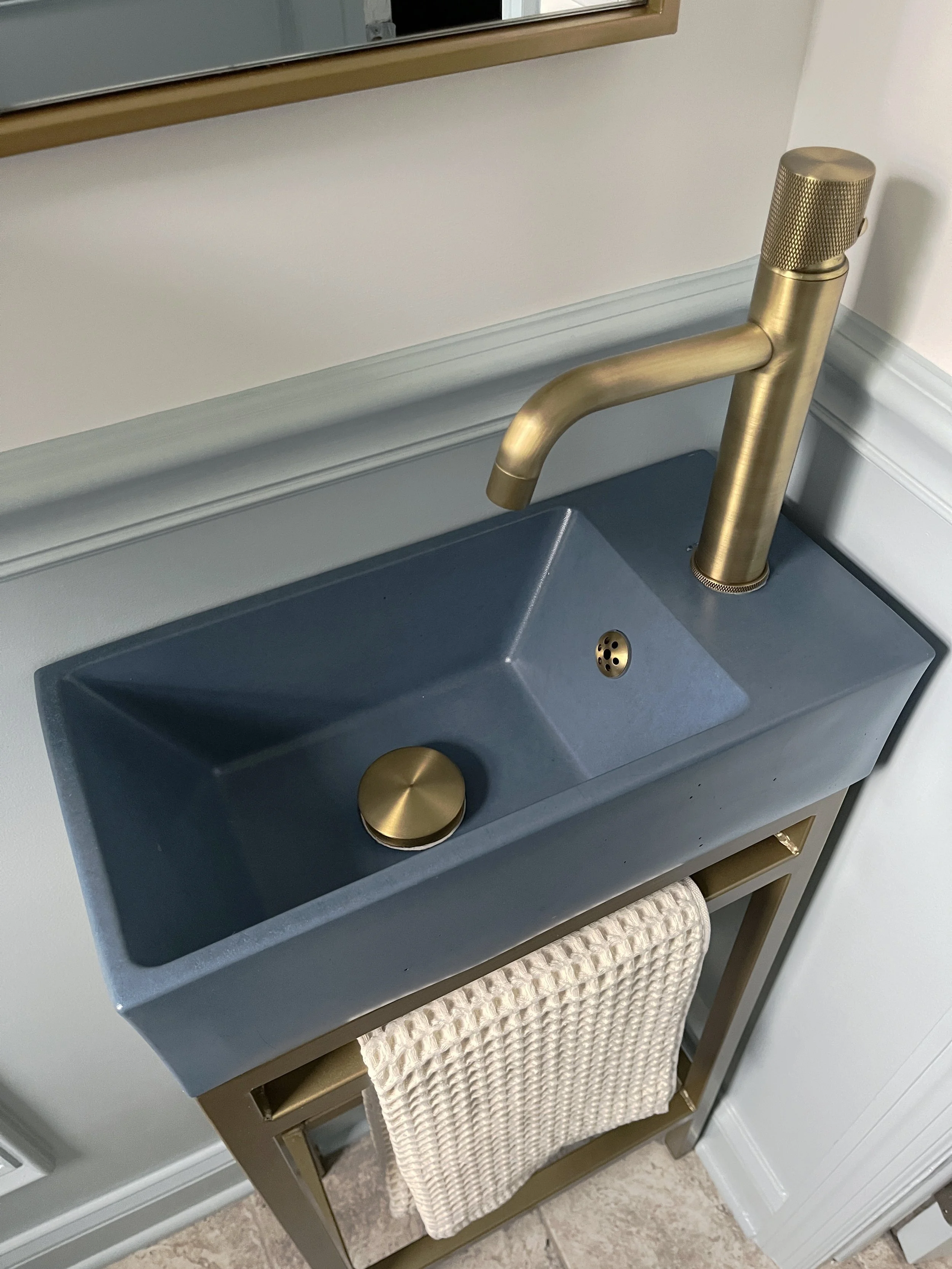
For a tiny powder room, you might not need as much storage. In this case, we’ll often specify a smaller console sink. In extreme cases, we’ll specify a very shallow console sink or a corner console sink. Ideally, this piece will have a horizontal support that doubles as a towel bar.
Tile + Paint Color
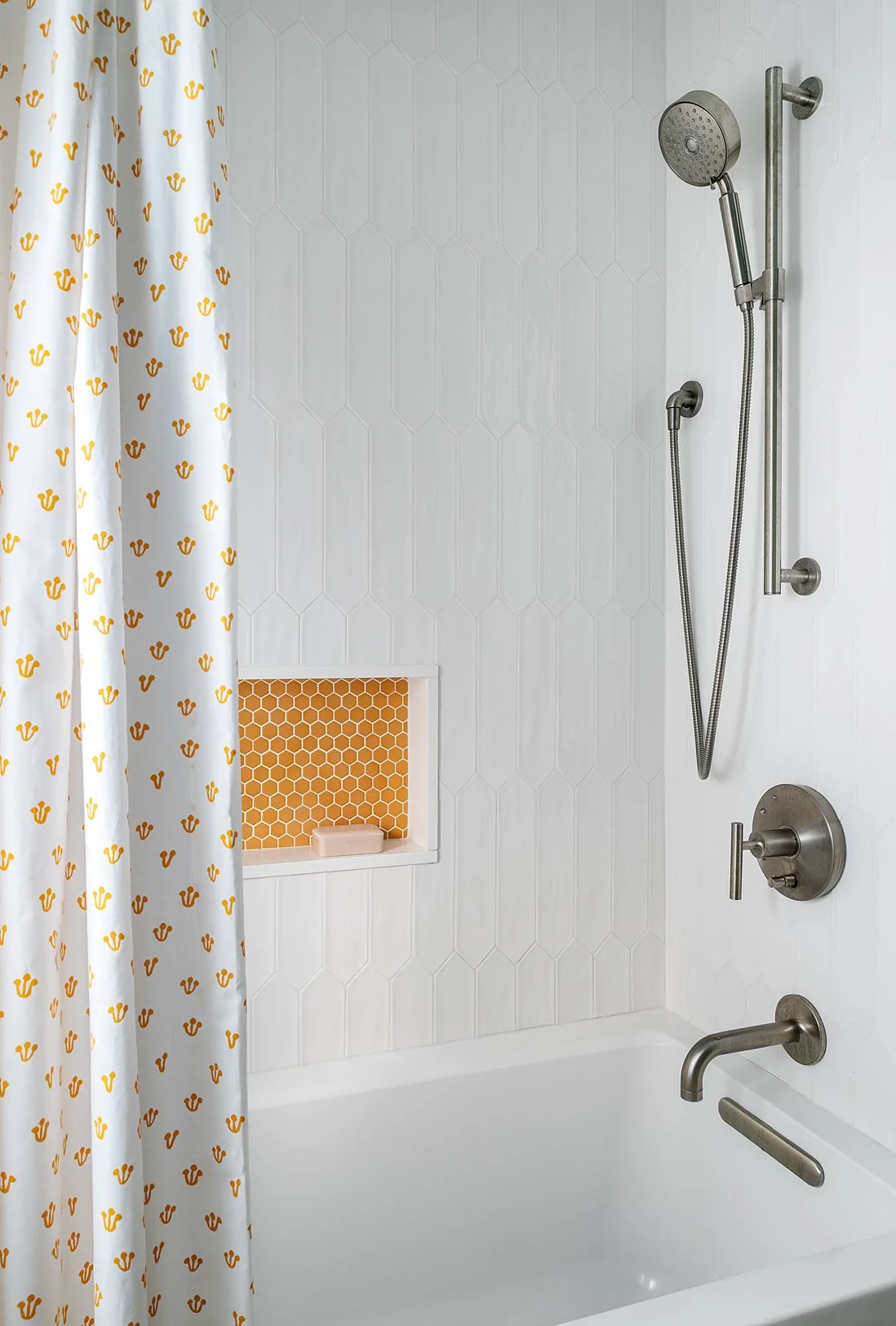
The more you can reflect light around the room the better. You can start with a lighter wall or floor tile, but you can take things a step further and select a glossy tile as opposed to matte. In our Colorful Collingswood project, we specified a glossy white picket tile for their tub/shower combo.
Paints with a higher sheen will bounce around more light as well, but be aware that the glossier the paint, the more imperfections you’ll see. Tread lightly. A satin finish is the highest sheen we’ll specify in a bathroom, unless we specify a level 5 wall finish.
In smaller spaces, we’ll sometimes continue the wall paint color onto the ceiling. A seamless color transition where the walls and ceiling meet can make the room feel more expansive. We’ve been using this technique for years, but a lot more people are privy to this technique called “color drenching.” You aren’t limited to light hues with color drenching. It’s a misconception that if you have dark walls and a dark ceiling, it’ll make the room feel smaller. This can actually make the space feel more expansive because the transition from one plane to another is seamless. Think about outer space—it’s dark everywhere, and literally goes on forever!
Pause. If you have a small bathroom with light walls, I do not recommend painting the ceiling a dark color. The transition from a light wall to a dark ceiling will make the ceiling feel lower because of the stark contrast. You may want that in an oversized room, but not in this situation.
Smaller Scale for a Smaller Room
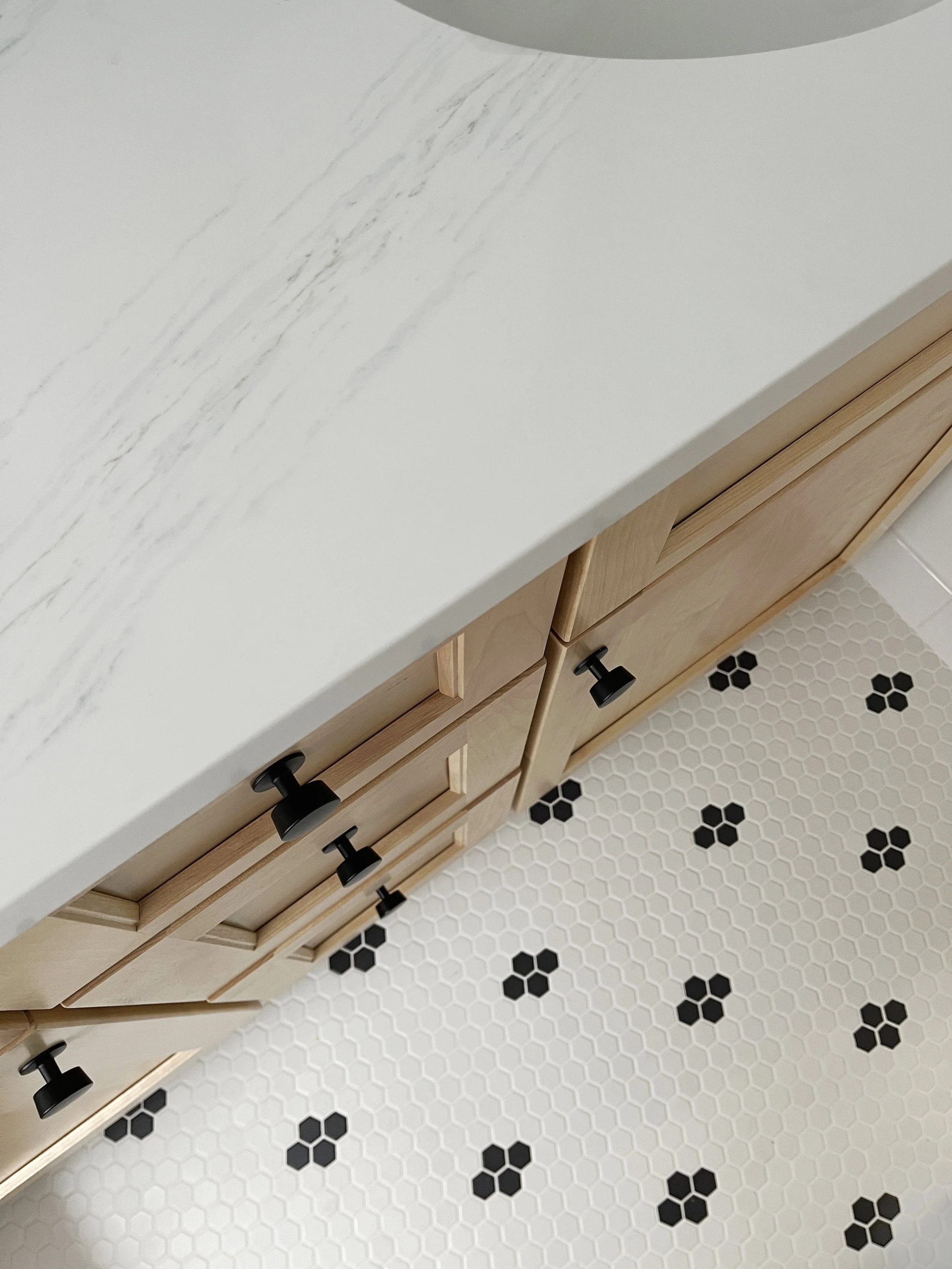
You’ll see that in some of the smaller bathrooms we’ve designed that we tend to use a smaller-sized floor tile. Most commonly, a small hex tile or a round penny tile mosaic. A smaller tile creates the illusion that the space is larger than it actually is. If you’re not fond of the idea of a mosaic tile because of the additional grout lines, I would still consider a smaller scale tile. Perhaps nothing bigger than 12” x 12”—our rule of thumb is to have at least 3 tiles span the smallest width of a room.
Another way to achieve the illusion of more space is by selecting a tile that feels more monolithic—like it’s one big slab. In this case, you’ll need a tile with more surface area. This is fun to implement with a terrazzo tile installation that has a 1/16” grout line. The trick here is to have the grout color match the background of the terrazzo tile as much as possible. Terrazzo has small scale aggregate, but having a virtually seamless install will make the floor feel more expansive.
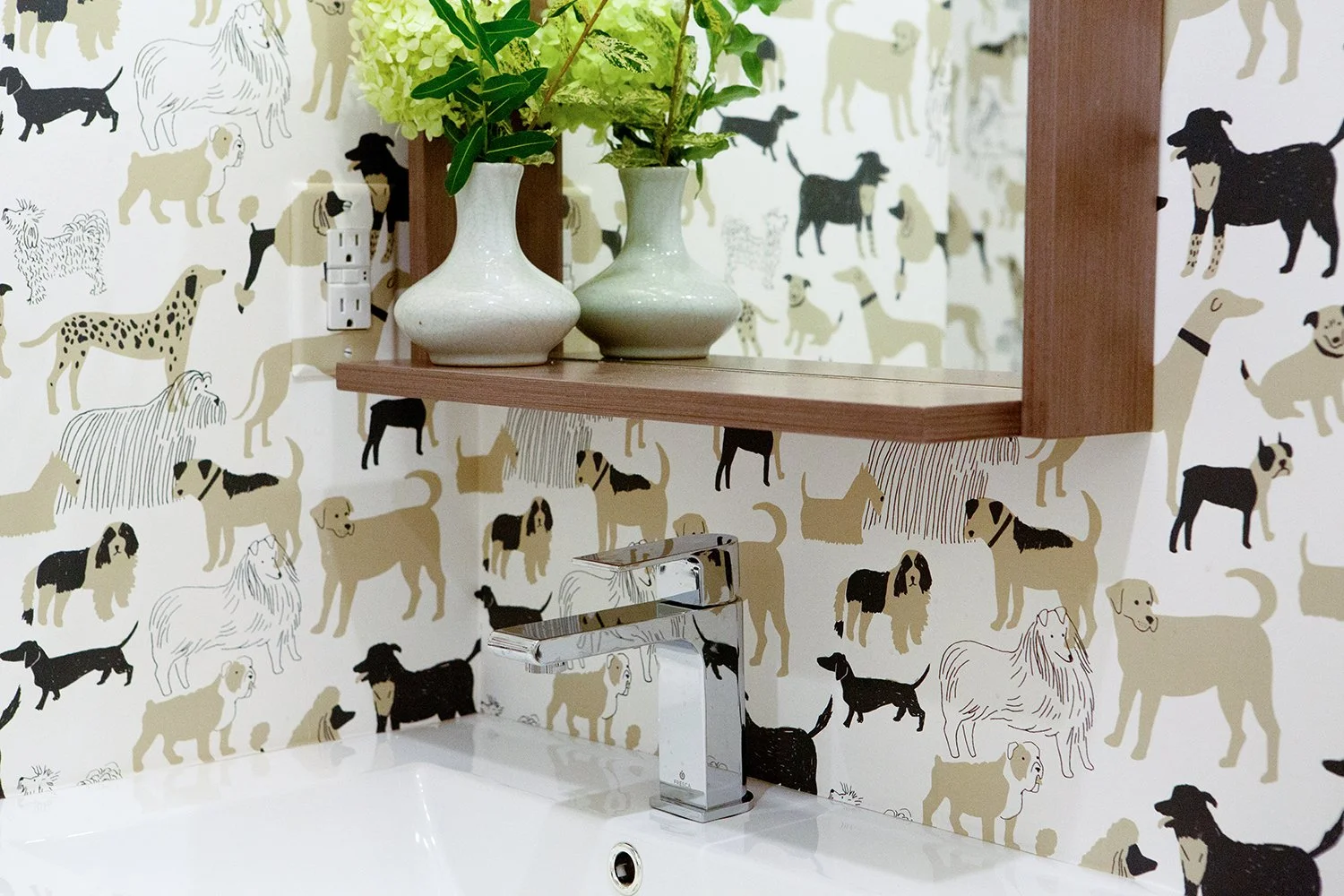
If you decide to have wallpaper installed in your bathroom (this is especially fun in powder rooms), it’s the same concept—you’ll want to look at prints with smaller patterns. You want to have a wallcovering style that’s proportional to the space. There are impressive wallpapers that have patterns that you really need to see from floor to ceiling, mostly unobstructed, to fully appreciate.
Transparency
Windows are an ideal way to make a space feel larger, but adding windows to a bathroom can get a bit tricky because most homeowners need to balance the gain of natural light and views with maintaining a level of privacy. You’re also limited on where you can place windows if you intend on having medicine cabinets above your vanity for extra storage.
It’s helpful to consider a new window location in relation to the shower location. If your window is outside of the shower, privacy can be handled with window treatments. However, if a window is inside the shower and exposed to water, the window itself will need to have something applied to it for privacy. That application could be frosted, textured or mirrored.
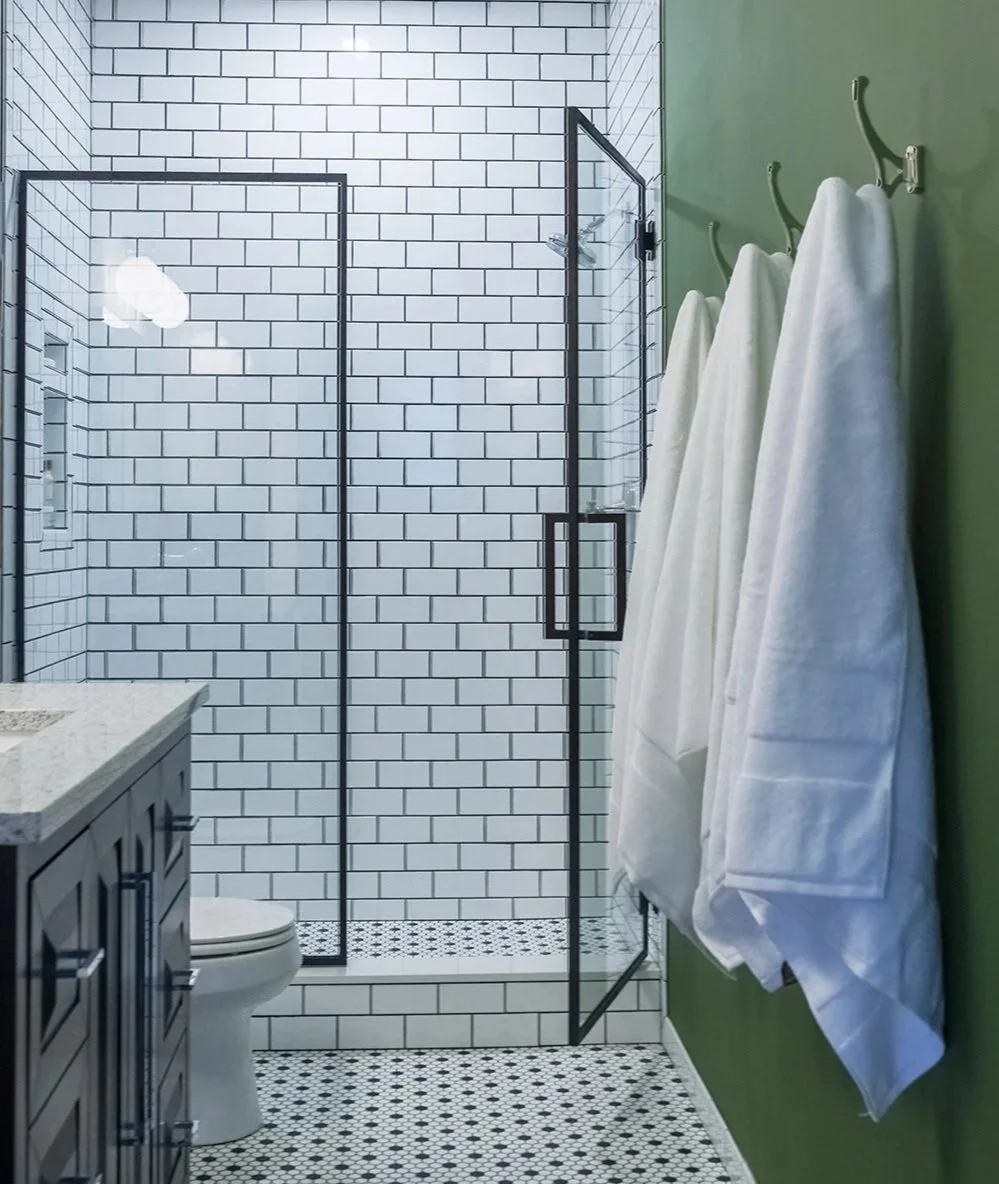
You’ll also want to think about what surrounds your shower in terms of transparency. Shower curtains completely cut off a room because they’re opaque. Since you can’t see to the back wall the room feels smaller. Not to mention, you wouldn’t be able to see all your beautiful new shower tile. This can be solved by installing a glass shower door enclosure. Seeing from one end of the room to the other makes the room feel at least 2’-0” larger because you can actually see the distance to the wall. A frameless glass shower door will take the transparency theme a bit further.
Lighting
Natural light is always a plus, so to reiterate, a bathroom with a window is ideal. Even a small window. Take a look at our Retro Garden Apartment project—the full bathroom of this in-law suite is in the basement, but that’s easy to forget with all the natural light they get into that space.
If you don’t have windows in the bathroom, but it’s adjacent to a bright hallway or primary bedroom you can have high windows installed in the shared wall. This “borrowed light” strategy can be especially valuable in urban living situations where natural lighting in an apartment or a rowhome can sometimes be scarce.
Lighting can be a combination of natural sunlight and artificial light . In bathrooms, we like to put a wet-rated recessed light in the shower, especially if there’s an opaque shower curtain. We don’t want our clients to feel like they’re in a dungeon when taking a shower. Integrating a ceiling light in the shower area creates more uniform illumination throughout the space and enhances visibility, particularly when shaving.
Furniture + Smart Storage
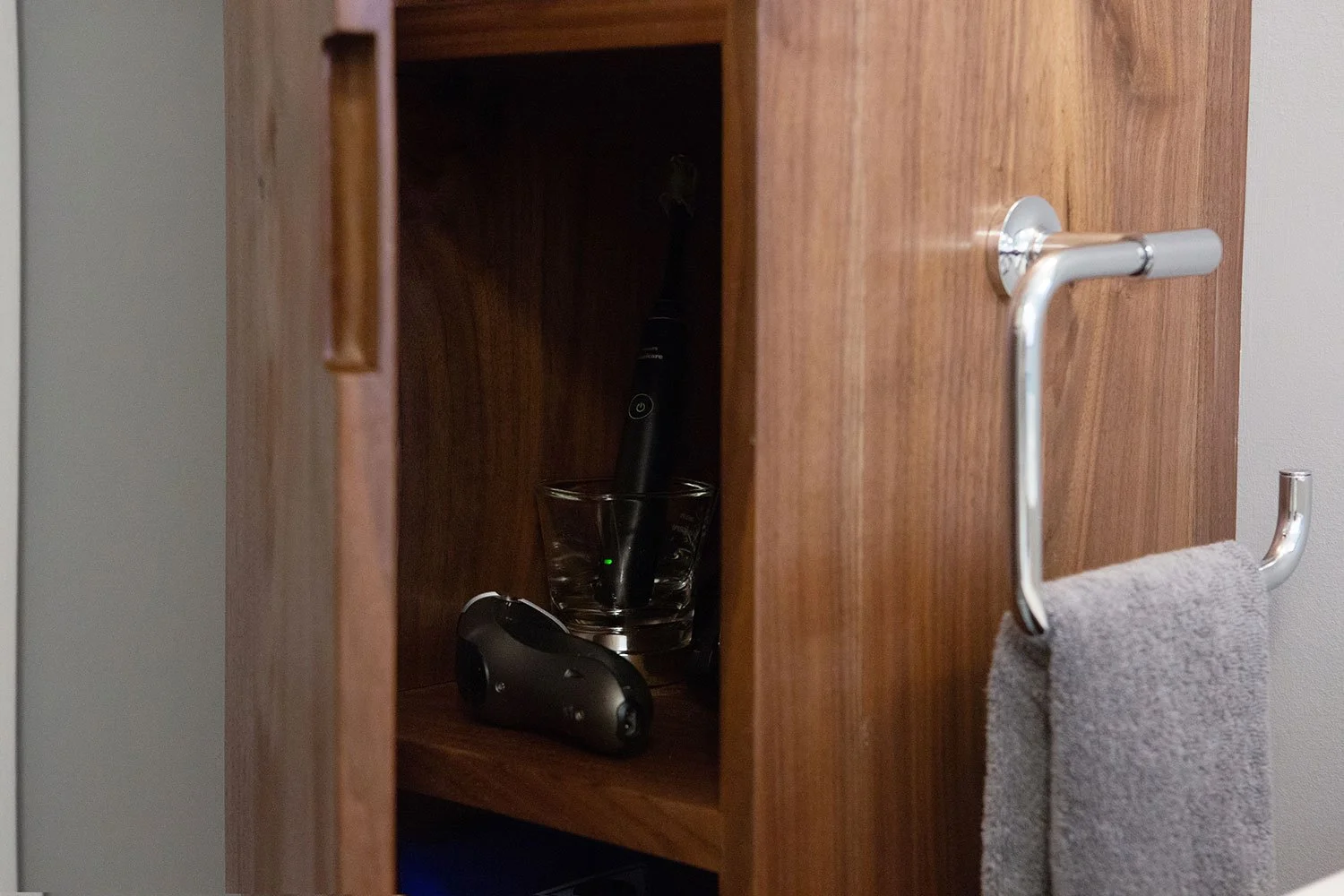
Clutter is usually a pain point in relation to stress, but clearing the countertop will also make a bathroom feel larger. First, start maximizing space in a small bathroom by selecting a vanity that provides optimized storage. Drawers are typically more functional than doors and there are great inserts for hair accessories etc. If the vanity alone isn’t providing enough storage, consider an upper cabinet that meets the countertop or a supplementary vertical cabinet. Don’t forget to integrate power for items that need to be charged. We often need to add these pieces of furniture in older homes where linen closets aren’t as common.
Don’t overlook the base of the vanity. A vanity with legs or a wall-mounted vanity will make a small bathroom feel larger and more spacious if you can see the flooring running underneath it. If you’d prefer a vanity that looks more like a piece of furniture you’ll want a new vanity that has legs. If you are alright with a more modern look, a floating (wall-mounted) vanity is a great solution.
In the shower, we often see shampoo bottles and soaps sitting on the edge of the tub during a Boutique Consultation. That makes the tub a pain to clean and things get knocked off the edges all the time. We like to design niches with several shelves to store all your bottles. There are corner shelves available, but they intrude into the showering space so we tend to only specify them by special request or if we’re dealing with a building constraint like an exterior wall.
Final Thoughts
A small bathroom doesn’t need to feel cramped and underwhelming. There are a number of solutions that can be implemented so that your bathroom feels more spacious without sacrificing functionality. In fact, the smaller the space, the better the design needs to be to optimize efficiency and create a pleasant environment.
Given that many of our projects are in historic New Jersey homes or Philadelphia rowhomes and townhouses we work with many clients that have at least one small bathroom. If you're in the Tiny Bathroom Club, and are thinking about a bathroom renovation to improve the space let’s chat about your project.