How to Prepare for Wood Floor Refinishing (Plus How Long Until You Can Move Back In)
Having your wood floor refinished can make you feel like you’re walking into a completely different home. There’s a richness and warmth that hardwood floors provide that can’t be replicated with any other floor material. After finding your floor refinishing professional, there are several actions you should take as a homeowner to make the wood refinishing process as successful as possible.
When Floor Refinishing is Part of a Larger Renovation
If you’re renovating multiple rooms or an entire level of your home, refinishing typically happens after drywall is up and before any cabinetry or trimwork installation begins. Your contractor will want the wood flooring to continue under any built-ins. The baseboard covers any of the gaps between the drywall and your flooring.
If multiple levels are being renovated at the same time, contractors usually start from the upper floor and work their way down so they can efficiently work themselves out of the home without walking on newly finished floors.
Floor Refinishing Prep
You’re going to need to move every single thing out of the spaces. That means the rugs, furniture, and drapery. Anything touching the floor or that you want protected from dust needs to be relocated. If you’ve just purchased a new home, floor refinishing is one of the tasks I recommend prioritizing before move-in, otherwise you’ll be moving all the furniture in your home twice.
Think about where you will store everything in the rooms where the floors will be refinished.. If you have a garage with plenty of space, perfect. If you only have wood floors in some of the spaces, perhaps you can move the furniture into another room. If neither of those solutions are an option, you may need to rent a portable storage container or a conditioned temporary storage space.
Pro Tip: If the flooring contractor requires that rooms be cleared before they start their work and directions are not followed, they have every right to leave the job site and wait until the spaces are cleared. It is not the contractor’s responsibility to move these pieces unless it is specifically outlined in their scope or work. If you’d like assistance with moving furniture, expect an upcharge or the responsibility of finding movers.

Temporary Relocation
Refinishing floors is wildly invasive. The repairing and sanding of the floors requires loud power tools and there will be a lot of dust. However, the most crucial part of the process is when they are applying final coats. Opening and closing doors that in turn moves plastic site protection means that air with dust is moving. When that dust settles, it sticks to the final coat. In order to fix those areas, they would need to be sanded down again, vacuumed and refinished…again.
For best results, all those living in the home (including pets) should be out of the home at least 24 hours after final coats have been applied. You’ll also want the spaces to be adequately ventilated, so the polyurethane odor has an opportunity to dissipate. If you plan everything just right, you may be able to schedule your contractor to refinish the floors while your on a vacation.
Flooring Expansion and Repair
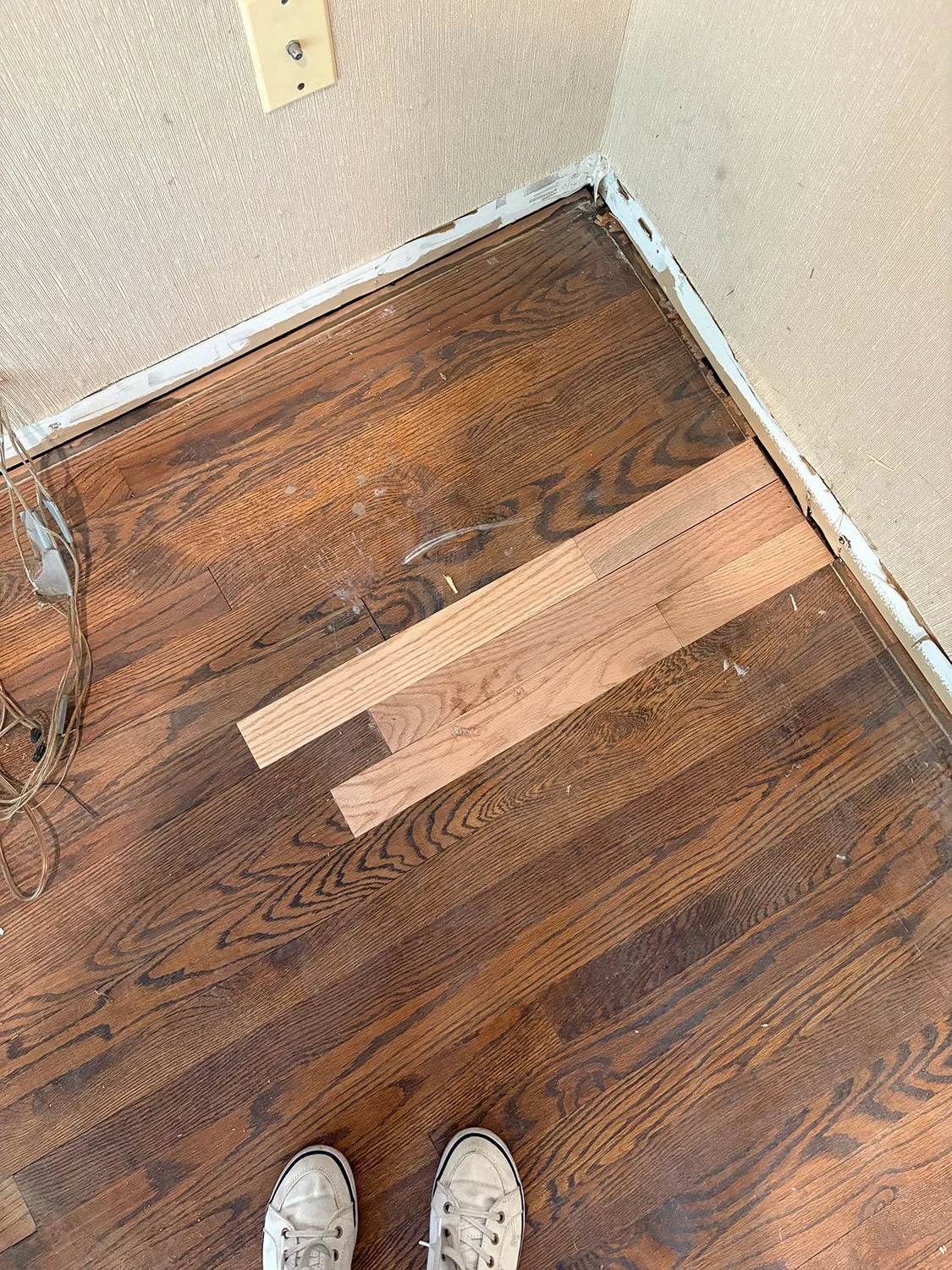
If you’re adding hardwood floors to rooms adjacent to original wood flooring, the installer will need to feather in the new planks that are the same wood species. Meaning where the floors meet the new planks will be installed in a staggered fashion so the transition is as seamless as possible. That was the order of events at our High-Contrast Geometric renovation—the kitchen was the only space on the main level with tile. The contractor removed the tile and feathered in new wood planks to match the original wood floors in the adjacent rooms as closely as possible. Be aware that planks that are over 100 years old and new wood planks will never look exactly the same because time changes the way a wood will accept stain and polyurethane.
Any planks that have water damage, splits or bad nicks should be removed and replaced with new planks. This usually involves power tools like a circular saw and multi-tool. After the new sections of hardwood have been installed, the flooring contractor will fill any holes. Afterwards, the entire floor gets sanded.
Selecting a Stain Finish
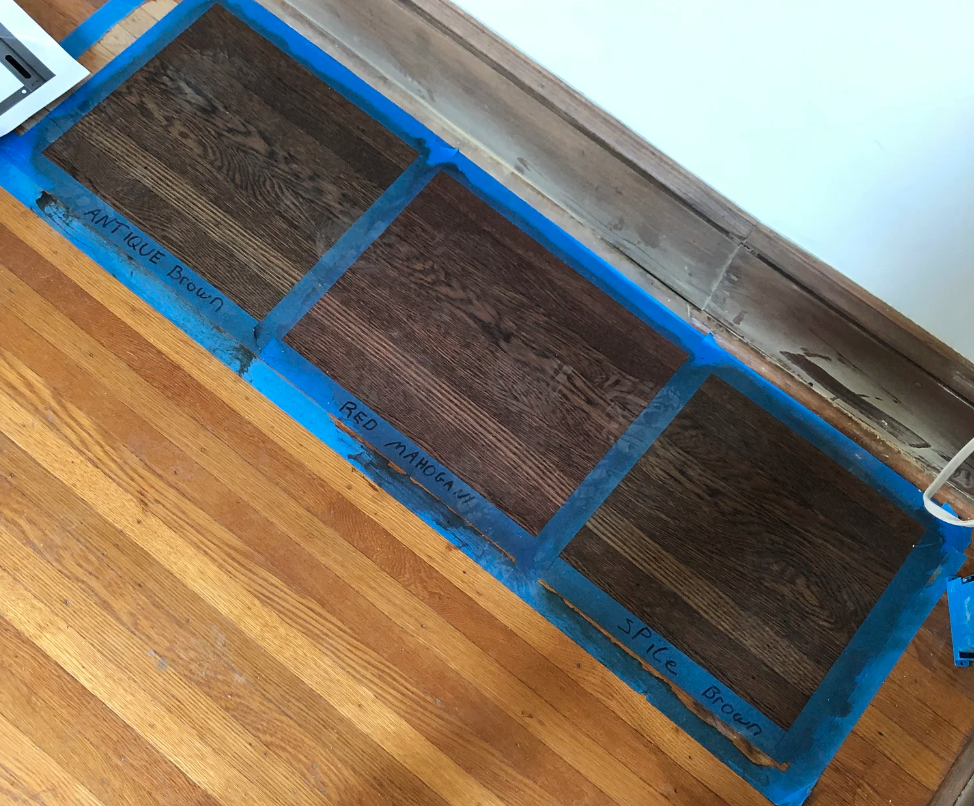
Tell your general contractor or floor refinishing professional what look you’re trying to achieve. Start with communicating whether you’d like a natural finish, medium stain, or dark stain. The existing wood species will provide design constraints. For example, if you have walnut floors, don’t expect them to look like pale white oak.
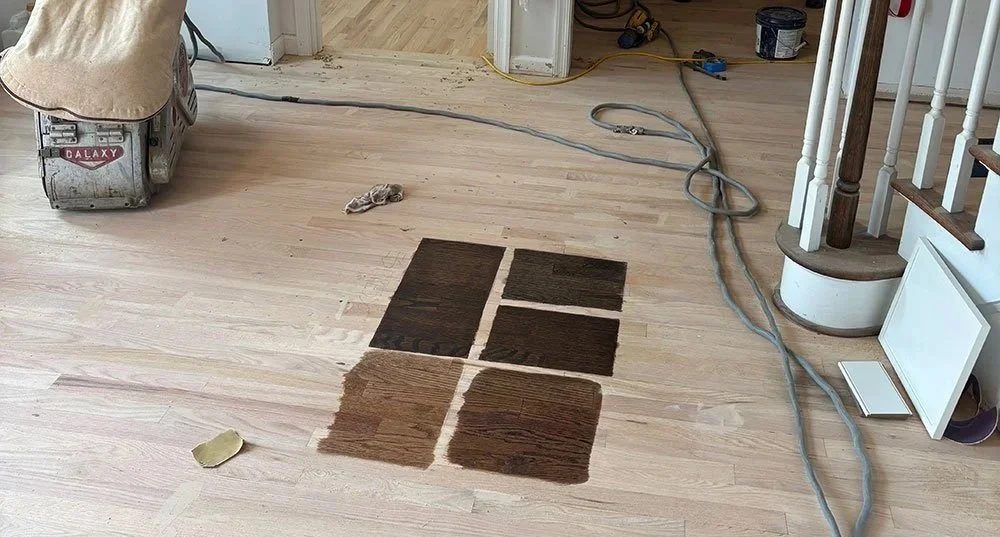
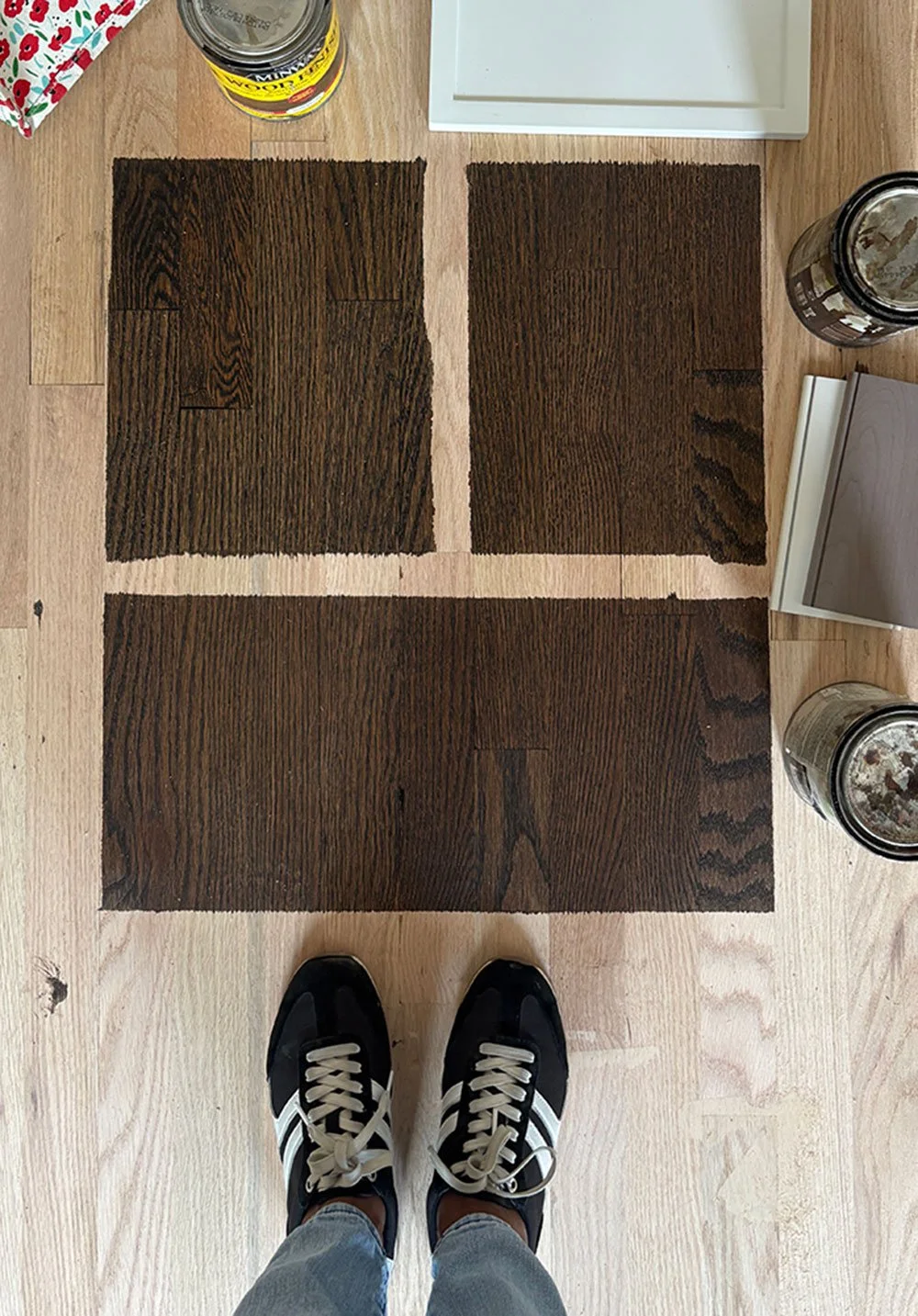
Your contractor should be able to narrow down which stain samples to provide on site after your discussion. I recommend reviewing between 3-5 stain samples. If you already know what tone you would like, three samples should suffice. If you have no idea whether you want a dark, mid-tone or natural finish, evaluate five stain samples max. Any more than five samples tends to overwhelm homeowners, unless you’re working with an interior design to provide guidance.
The flooring contractor will typically apply stain samples directly to your floor. The look of each stain will be influenced by the wood species, age, and the humidity and sunlight it was exposed to over time. Since every wood floor will accept a stain slightly differently, a generic sample block won’t provide an accurate representation.
As your contractor when they think stains will be ready for in-person review. For major material and finish decisions, you should not depend on videos or photos—the colors are almost never accurate. Any travel should happen after the stain is selected. The flooring contractor can’t to continue until the stain color is finalized. If you’re unavailable, your project will be delayed.
How soon after floor refinishing can you walk on your floors?
Curing time varies depending on the type of polyurethane being used and the general site conditions. Always double check with your installer, but generally at least 24 hours after the final top coat is applied you can walk on your floors in socks only.
If your renovation includes more than just refinishing hardwood floors, your contractor should cover your pristine floors with Ram Board or something comparable for protection against dropped tools, work boots with nails stuck in a groove, or moving cabinetry during installation. Ram Board is a thin, breathable surface protection that can be easily removed after your renovation is complete.
How soon after floor refinishing can you move furniture back in?
For the finish to completely cure, there needs to be adequate air flow. If the furniture is put back into the space too early it can cause permanent indentations or peeling. You WILL NOT want to have the floors sanded down and refinished again due to impatience.
Depending on the type of finish, you should wait 5-7 days before moving any furniture back in. If it's especially humid, you want to be closer to seven days. Wait about 14 days before putting down any rugs. The backing of rugs could potentially scratch the wood—another great reason to always have rug pads.
Should the table and chair legs have floor protection?
Always! Furniture should always be lifted rather than slid across a floor, but depending on the weight, that’s not always feasible. You might be careful when moving tables and chairs, but guests, children and pets may be less cautious. These are the felt pads that one of our favorite wood flooring contractors recommends.
Final Thoughts
Seemingly, the only big decisions to make is when to refinish wood floors and what stain will complement your style best. However, site preparation also involves many consequential decisions that will heavily influence how well your flooring contractor is able to do their job. You always want to do your part to set your contractors up for success so you can get the best results.
Related Blog Posts